
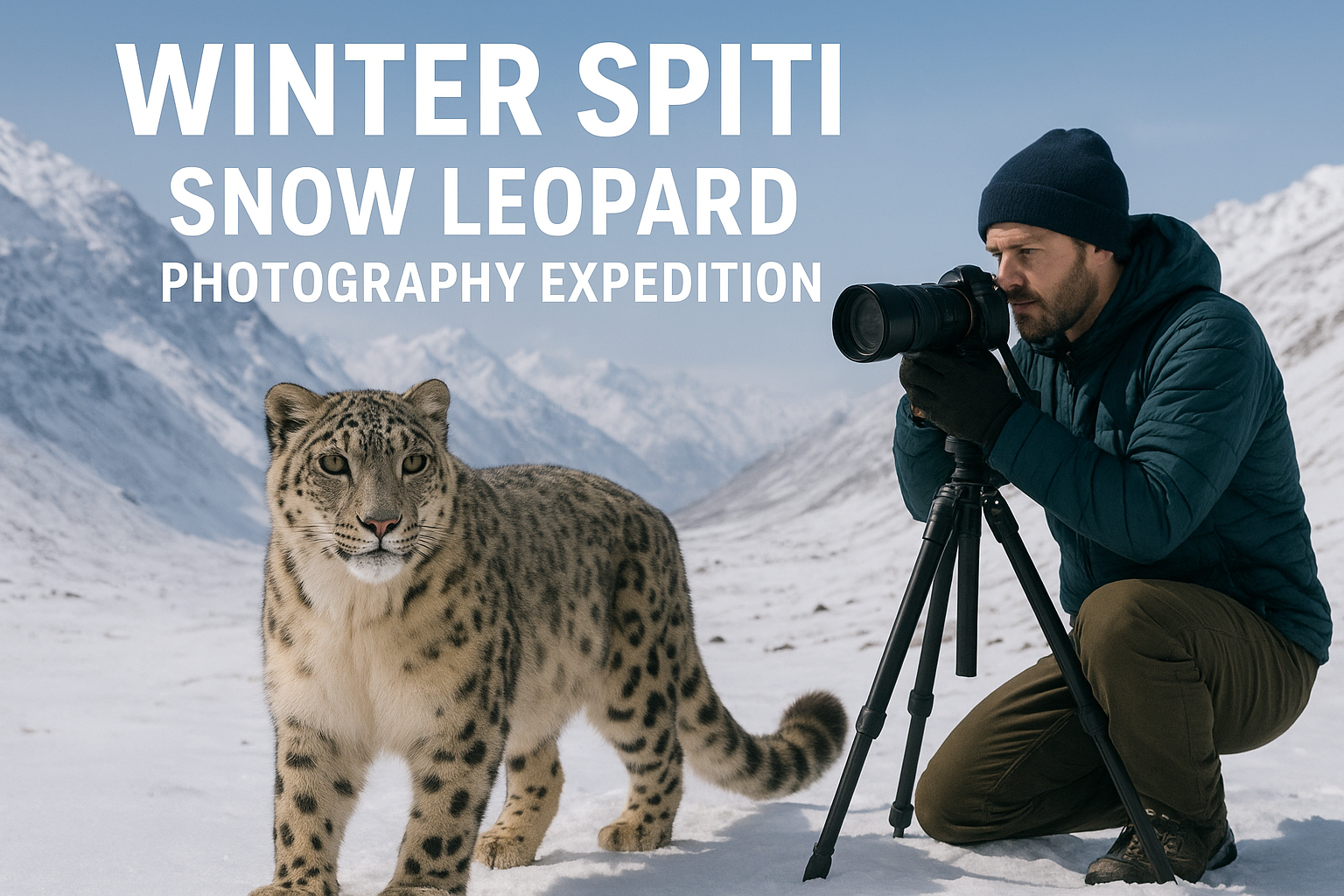
Winter Spiti Snow Leopard Photography Expedition
Detailed Itinerary & Essential Information
Expedition Overview
Duration: 11 Days / 10 Nights
Season: December to March (Peak Season: January-February)
Base Camp: Kibber Village, Spiti Valley, Himachal Pradesh
Starting Point: Chandigarh
Maximum Altitude: 4,500 meters (14,760 feet)
Difficulty Level: Moderate to Challenging
Group Size: Small groups of 4-8 participants for personalised experience
About This Expedition
This exclusive winter photography expedition takes you deep into the snow-laden landscapes of Spiti
Valley, one of the world’s premier destinations for photographing the elusive snow leopard in its
natural habitat. Kibber Wildlife Sanctuary, situated at over 4,200 meters, hosts one of the highest
density snow leopard populations in India, with recent surveys estimating 83 snow leopards across
Himachal Pradesh’s high-altitude regions.
During winter months (December-March), heavy snowfall forces these magnificent cats and their prey
—Himalayan ibex and blue sheep (bharal)—to descend to lower altitudes, significantly increasing
sighting opportunities. Our expedition combines expert local spotters with proven tracking techniques
to maximize your chances of encountering and photographing this endangered apex predator.
Detailed Day-by-Day Itinerary
Day 1: Arrival in Chandigarh – Drive to Rampur Bushahr
Distance: 180 km | Drive Time: 6-7 hours
Altitude: 350m → 1,021m (Rampur Bushahr)
Activities:
Arrival at Chandigarh Airport or Railway Station
Meet your expedition leader and team members
Comprehensive expedition briefing covering safety protocols, altitude acclimatisation, and photography objectives
Equipment check: cameras, lenses, tripods, cold weather protection
Scenic drive through Shimla, Narkanda, and along the Sutlej River
Pass through pine forests and apple orchards
Accommodation
Comfortable hotel in Rampur Bushahr with modern amenities
Meals:
Lunch and dinner included
Day 2: Rampur Bushahr to Kalpa
Distance: 100 km | Drive Time: 4-5 hours
Altitude: 1,021m → 2,960m (Kalpa)
Activities:
Early morning departure along the Old Hindustan-Tibet Road
First spectacular views of the Kinner Kailash mountain range (6,050m)
Visit local markets in Reckong Peo (optional)
Arrive in Kalpa village, known for its stunning mountain vistas
Acclimatization walk through apple orchards and traditional villages
Golden hour photography session: Sunset over Kinner Kailash peaks
Evening briefing on altitude sickness prevention and recognition
Accommodation:
Hotel or traditional homestay in Kalpa with mountain views
Meals:
Breakfast, lunch, and dinner included
Photography Opportunities:
Kinner Kailash peak during golden hour
Traditional Kinnauri architecture
Winter mountain landscapes
Day 3: Kalpa to Tabo via Nako
Distance: 160 km | Drive Time: 8-9 hours
Altitude: 2,960m → 3,280m (Tabo)
Activities:
Early morning departure (7:00 AM recommended)
Drive through the dramatic Kinnaur-Spiti landscape transition
Stop at Khab village to witness the confluence of Spiti and Sutlej rivers
Visit Nako village and photograph the frozen Nako Lake
Cross into Spiti Valley—observe the transformation from green valleys to cold desert
Arrive in Tabo, home to the 1,000-year-old Tabo Monastery
Visit Tabo Monastery, known as the “Ajanta of the Himalayas” for its ancient murals and paintings
First night in traditional Spitian homestay with firewood-heated rooms
Accommodation:
Traditional Spitian homestay in Tabo with attached washrooms and heating facilities
Meals
Breakfast, lunch, and dinner included (authentic Spitian cuisine)
Photography Opportunities:
River confluences and frozen waterfalls
Ancient monastery architecture and Buddhist art
Cold desert landscapes beginning to appear
Day 4: Tabo to Kibber via Kaza
Distance: 65 km | Drive Time: 3-4 hours
Altitude: 3,280m → 4,270m (Kibber)
Activities:
Morning exploration and photography in Tabo
Drive to Kaza, the sub-divisional headquarters of Spiti Valley
Optional visit to Dhankar Monastery perched on a cliff
Visit Key Monastery, Spiti’s largest and most iconic monastery
Continue to Kibber village (one of the world’s highest motorable villages)
Check into homestay accommodation with traditional firewood tandoors for heating
Meet your team of expert local wildlife spotters and trackers
Comprehensive snow leopard tracking briefing:
Understanding snow leopard behavior and habitat
Safety protocols in high altitude
Photography techniques for extreme conditions
Equipment preparation for field work
Evening acclimatization walk around Kibber village
Accommodation
Traditional Kibber homestay with heated rooms, attached washrooms, electricity, and Wi-Fi
Meals
Breakfast, lunch, and dinner included
Important Notes:
This is a crucial acclimatization day. Rest adequately and hydrate well before beginning intensive
tracking tomorrow.
Snow Leopard Tracking Days (Days 5-8)
The next four days represent the core of your expedition, dedicated entirely to tracking and
photographing snow leopards in their natural habitat within Kibber Wildlife Sanctuary.
Daily Schedule for Tracking Days:
:00 AM – Expert local spotters head out to scan the mountains
6:00 AM – Wake-up call and hot breakfast
7:00 AM – Departure to tracking locations based on spotter reports
7:30 AM – 5:00 PM – Field photography and wildlife observation
12:30 PM – Packed lunch in the field
5:30 PM – Return to homestay
7:00 PM – Image review, post-processing workshop, and dinner
8:30 PM – Evening briefing for next day’s strategy

Winter Spiti Snow Leopard Photography Expedition
Expedition Overview
Duration: 11 Days / 10 Nights
Season: December to March (Peak Season: January-February)
Base Camp: Kibber Village, Spiti Valley, Himachal Pradesh
Starting Point: Chandigarh
Maximum Altitude: 4,500 meters (14,760 feet)
Difficulty Level: Moderate to Challenging
Group Size: Small groups of 4-8 participants for personalised experience
About This Expedition
This exclusive winter photography expedition takes you deep into the snow-laden landscapes of Spiti
Valley, one of the world’s premier destinations for photographing the elusive snow leopard in its
natural habitat. Kibber Wildlife Sanctuary, situated at over 4,200 meters, hosts one of the highest
density snow leopard populations in India, with recent surveys estimating 83 snow leopards across
Himachal Pradesh’s high-altitude regions.
During winter months (December-March), heavy snowfall forces these magnificent cats and their prey
—Himalayan ibex and blue sheep (bharal)—to descend to lower altitudes, significantly increasing
sighting opportunities. Our expedition combines expert local spotters with proven tracking techniques
to maximize your chances of encountering and photographing this endangered apex predator.
Highlights
- December to March (Peak Season: January-February)
- Base Camp: Kibber Village, Spiti Valley, Himachal Pradesh
- Starting Point: Chandigarh Maximum Altitude: 4,500 meters (14,760 feet)
- Difficulty Level: Moderate to Challenging
- Group Size: Small groups of 4-8 participants for personalised experience


