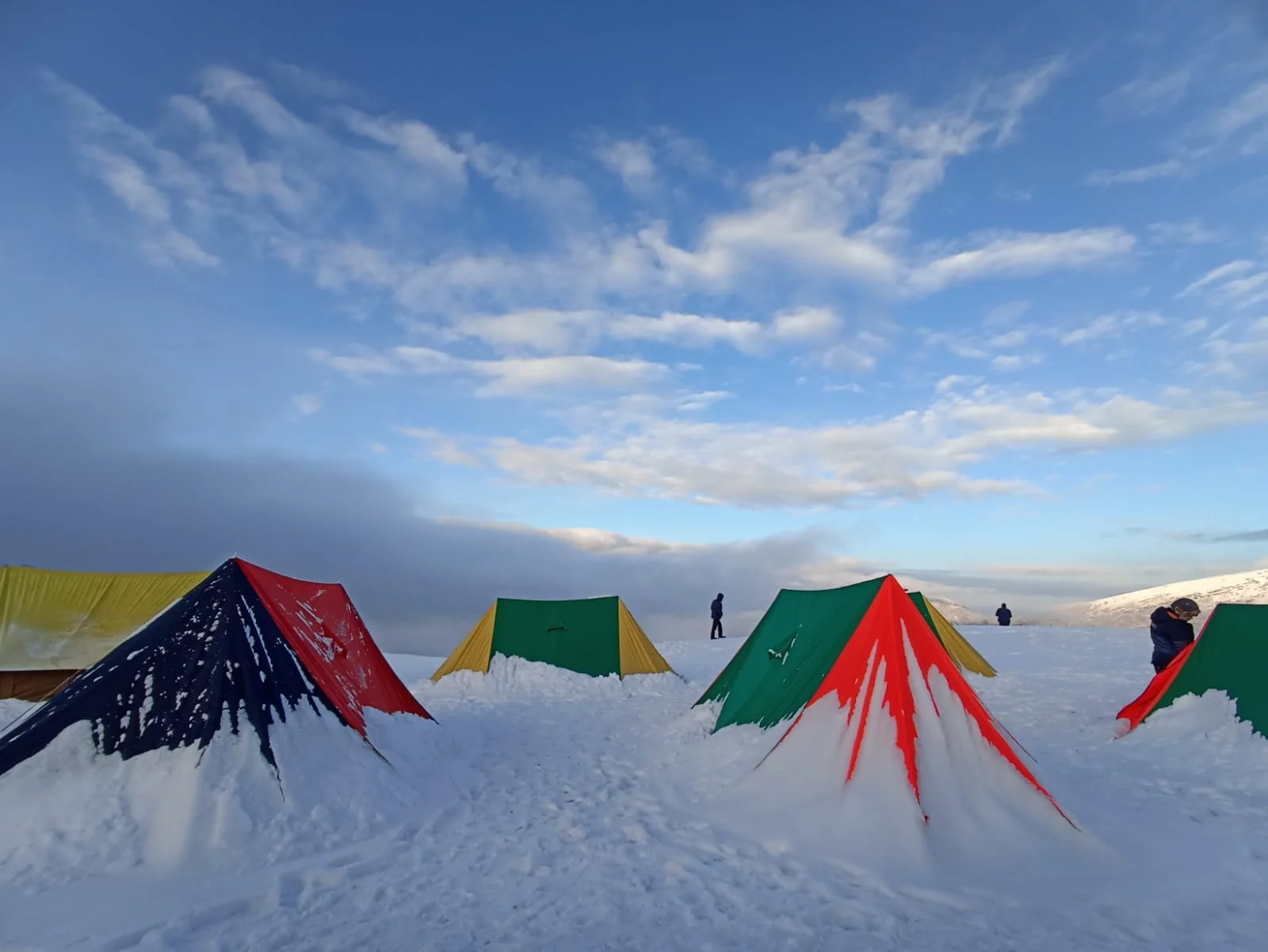
Package 4 days and 3 nights Trek and CampingTrek
Visiting site Rajgundha, Palachak, Jhordi Waterfall
Minimum altitude Above 4000 mtr
Itinerary for 4 days and 3 Nights
Site / Trek Trek
time Night Stay Meal
Day 1 Bir to Rajgundha 4 hour Rajgundha – Lunch Dinner
Day 1 Rajgundha to Palachak 4-5 hour Palachak Breakfast Lunch Dinner
Day 2 Palachak to Jhordi 4-5 hour Jhordi Breakfast Lunch Dinner
Day 3 Jhordi to Rajgundha 7-8 hour – Breakfast Lunch –

Activity: Trekking, Camping, Sightseeing
Other Inclusions: Bonfire, Complimentary tea and snacks at the campsite
Transport: Transport is not included
Things to carry
ID proof Govt. issued identity proof
Footwear
Wear comfortable trekking shoes with good stiff soles Preferable
waterproof hiking boots 2-3 pairs of cotton socks Avoid wearing
formal shoes, slips, or sneakers
Clothing Jacket (Windproof or waterproof preferable), Rain sheet.
Other recommended things
Toiletries: Sanitizer, Moisturizer, Lip balm, Soap, sunscreen,
toothpaste, etc. 1L water bottle.
Note
During the trek, You have to carry your own luggage
Travel is the movement of people between relatively distant geographical locations, and can involve travel by foot, bicycle, automobile, train, boat, bus, airplane, or other means, with or without luggage, and can be one way or round trip. Travel can also include relatively short stays between successive movements.
The origin of the word "travel" is most likely lost to history. The term "travel" may originate from the Old French word travail, which means ‘work’. According to the Merriam Webster dictionary, the first known use of the word travel was in the 14th century.
It also states that the word comes from Middle English travailen, travelen (which means to torment, labor, strive, journey) and earlier from Old French travailler (which means to work strenuously, toil). In English we still occasionally use the words "travail", which means struggle. According to Simon Winchester in his book The Best Travelers’ Tales (2004), the words "travel" and "travail" both share an even more ancient root: a Roman instrument of torture called the tripalium (in Latin it means "three stakes", as in to impale).